Hello, this is Rocwing.
With the explosive rise of ChatGPT and generative AI, a cynical narrative has begun to spread: "In an age where machines can write and code, aren't liberal arts and humanities degrees becoming obsolete?" However, if you look at the epicenter of global innovation—Silicon Valley—and the leaders of the world's top tech companies, the exact opposite is true. Now, more than ever, they are desperately seeking minds steeped in the Humanities.
What exactly is the power of the humanities, and why are the pioneers of cutting-edge technology so obsessed with it? Today, we will explore the essence of this discipline and uncover why a deep understanding of human nature is the ultimate survival weapon in the era of artificial intelligence.
1. What Are the Humanities? The Search for "Humanitas"
The word "humanities" originates from the Latin term Humanitas, popularized by the ancient Roman philosopher Cicero. For Cicero, humanitas was not just about being biologically human; it meant civilized, educated, and refined human nature—the very qualities that separate us from barbarism.
While the natural sciences seek to understand the laws of Nature, the humanities explore the realms of Culture, history, philosophy, and language. It is the intellectual pursuit of the most fundamental question: "What does it mean to be human?" It is the compass that guides not just what we can build, but how we should live.
2. The Four Stages of Humanities: From Ignorance to Global Imagination
To truly grasp the value of the humanities today, we can break down its evolution and modern relevance into four distinct stages.
Phase 1: The Power of the Right Question
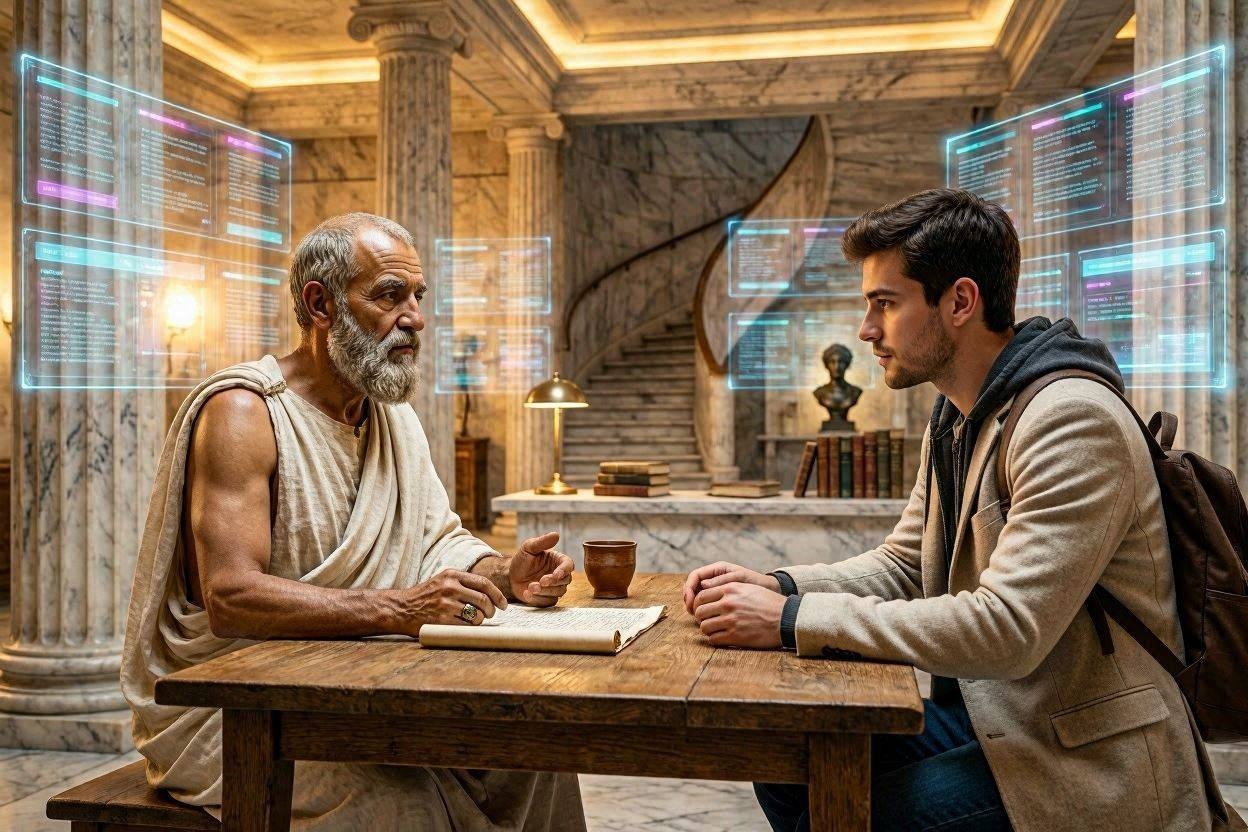
The foundation of all learning begins with a paradox: acknowledging our own ignorance. Just as Socrates famously declared, true wisdom lies in knowing what you do not know. Escaping ignorance doesn't mean blindly memorizing data. It means possessing the analytical power to ask the right questions and categorize the world around us. Are human emotions and gender roles purely biological (Nature), or are they shaped by societal learning (Culture)? Constantly questioning these boundaries is the starting point of the humanities. Today, this intersects beautifully with science, creating a new wave of "Consilience" (the unity of knowledge) that modern scholars highly value.
Phase 2: The Modern Paradox of Light and Shadow
Today, the humanities face a fascinating contradiction. On one hand, there is a dark "shadow": universities worldwide are slashing liberal arts funding and closing departments, driven by a hyper-pragmatic, job-focused society. Yet, there is a brilliant "light": outside academia, the public's thirst for meaning has never been stronger. Bestselling philosophy books, ethics podcasts, and public humanities lectures are experiencing a massive renaissance as individuals search for direction in an increasingly chaotic world.
Phase 3: The Moral Weight in the Era of the "Super Individual"
Why is a foundation in the humanities so critical today? Because we live in democratic societies where the individual holds immense power. When ordinary citizens elect leaders and shape society, civic virtue and moral reflection become matters of national survival. History shows us the catastrophic results of intellect devoid of humanistic reflection. The tragedy of the Holocaust was not solely the work of cartoonish villains. As philosopher Hannah Arendt famously coined with the "banality of evil," the genocide was largely executed by ordinary, highly educated bureaucrats who simply stamped papers and followed orders without critical thought. A mind that refuses to reflect and ask "why" is the most dangerous weapon of all.
Phase 4: The Secret Engine of K-Content and Global Soft Power
In the 21st-century global market, the humanities have become an unparalleled competitive advantage. While technical skills quickly become outdated, the flexible, creative mindset required to understand diverse cultural backgrounds is irreplaceable.
This is exactly where the explosive global success of K-Content and the Hallyu (Korean Wave) finds its roots. Have you ever wondered why BTS captured the hearts of millions worldwide? It wasn't just the flawless choreography; their music is deeply rooted in the humanities. They sing about universal psychological struggles, draw inspiration from classic literature (like Hermann Hesse’s Demian), and address the profound anxieties of modern youth. Similarly, global K-drama mega-hits like Squid Game, Pachinko, and fantasy epics like Goblin are masterclasses in "historical imagination." They take profound human emotions—shaped by Korea's unique, turbulent historical trajectory—and translate them into compelling narratives that resonate universally. To captivate the world, you must first deeply understand the human condition.
3. Why Silicon Valley Big Tech CEOs Are Obsessed with Philosophy
"Technology alone is not enough." The people who practice this mantra most fiercely are, ironically, the titans of the tech industry.
- Steve Jobs (Founder of Apple): When unveiling the iPad, Jobs famously stated, "It’s in Apple’s DNA that technology alone is not enough—it’s technology married with liberal arts, married with the humanities, that yields us the result that makes our heart sing."
- Reid Hoffman (Founder of LinkedIn): Holding a master's degree in philosophy from Oxford University, Hoffman credits his humanities background for his success. He noted that understanding how humans form meaning and relationships was the core architectural foundation for building LinkedIn's network.
- Stewart Butterfield (Founder of Slack): The creator of the global collaboration tool holds degrees in philosophy and history from Cambridge. He often emphasizes that understanding how people communicate and resolve conflicts is far more difficult—and valuable—than writing software code.

4. How Western Education Shapes Leaders Who Rule the World
Many Western nations have long placed the humanities at the very center of their educational systems to cultivate future leaders.
- Oxford University's 'PPE' (UK): The legendary Philosophy, Politics, and Economics (PPE) degree has produced countless British Prime Ministers and global leaders. It proves that the most crucial skill for a leader is not administrative technicality, but the ability to critically analyze the world and make ethical value judgments.
- The Baccalauréat (France): The core of the French high school exit exam is a rigorous philosophy essay. Questions like "Is truth merely an illusion?" or "What can we sacrifice for the state?" become national talking points, encouraging an entire country to engage in philosophical debate.
- The Concept of 'Bildung' (Germany): The German educational philosophy of Bildung focuses on self-cultivation. It is not about vocational training, but about forming one's character and understanding one's place in the broader world.
These systems share a steadfast belief: You can train a technician in a few months, but a citizen with the philosophical depth to guide society in the right direction requires a deep foundation in the humanities.
5. Conclusion : What Must We Prepare for in the AI Era?
We have entered an era where AI can write code, analyze financial statements, and even generate art. Moving forward, the ability to "find the correct answer quickly" is no longer a human competitive advantage. The machines will always be faster.
So, what is the irreplaceable human skill of the future? It is the ability to ask the right questions and exercise empathy and ethical judgment.
Consider the hottest new tech job: the Prompt Engineer. At its core, prompt engineering is less about computer science and more about the humanities. The quality of an AI's output is entirely dependent on the historical context, philosophical nuance, and cultural parameters provided by the human asking the question.
As machines increasingly replicate human intelligence, the value of being authentically human is skyrocketing. Reading literature to empathize with the sorrow of others, studying history to avoid repeating past mistakes, and using philosophy to question the meaning of life—these are not outdated hobbies. They are the only true compass we have to navigate the massive tidal wave of the AI era without losing our souls.