The Broken Promise of the Modern State
We surrender a portion of our freedom, pay our taxes, and abide by the laws of the state in exchange for a fundamental promise: protection and a fair shot at prosperity. But as AI displaces human labor, wealth inequality skyrockets to historic highs, and mega-tech platforms hoard more power than actual governments, a chilling question is echoing among frustrated generations across the globe: "Is this even a functioning country? What is the state actually doing for us?" To understand how to fix our broken modern system, we must dig into the dust of archaeology to uncover why humans voluntarily invented the "State" thousands of years ago—and what happens when that ancient survival contract expires.
Hello, this is Rokwing.
Across the globe, young adults are facing an unprecedented job crisis, the middle-class ladder has been shattered, and local businesses are being swallowed whole by massive franchises and digital monopolies. Even if you work relentlessly, fair compensation feels further out of reach. In this era of extreme polarization, many are looking at their seemingly indifferent governments and asking a bitter question: "Why do we even need a state?"
To find the answer, we must turn back the clock thousands of years. Why did early humans give up the freedom of living as independent individuals to invent an oppressive, hierarchical system called the "State"? Let's look through the lens of archaeological discoveries to examine the original "social contract," and explore what direction the state must take in the impending AI era.
1. The Voluntary Surrender : Archaeology Uncovers the Birth of the State
If we trace human history back to its roots, the state was not a divine mandate, nor was it a naturally existing group like a family. In the modern Western view that the world has largely adopted, the state is an institution deliberately created by humans based on sheer necessity.
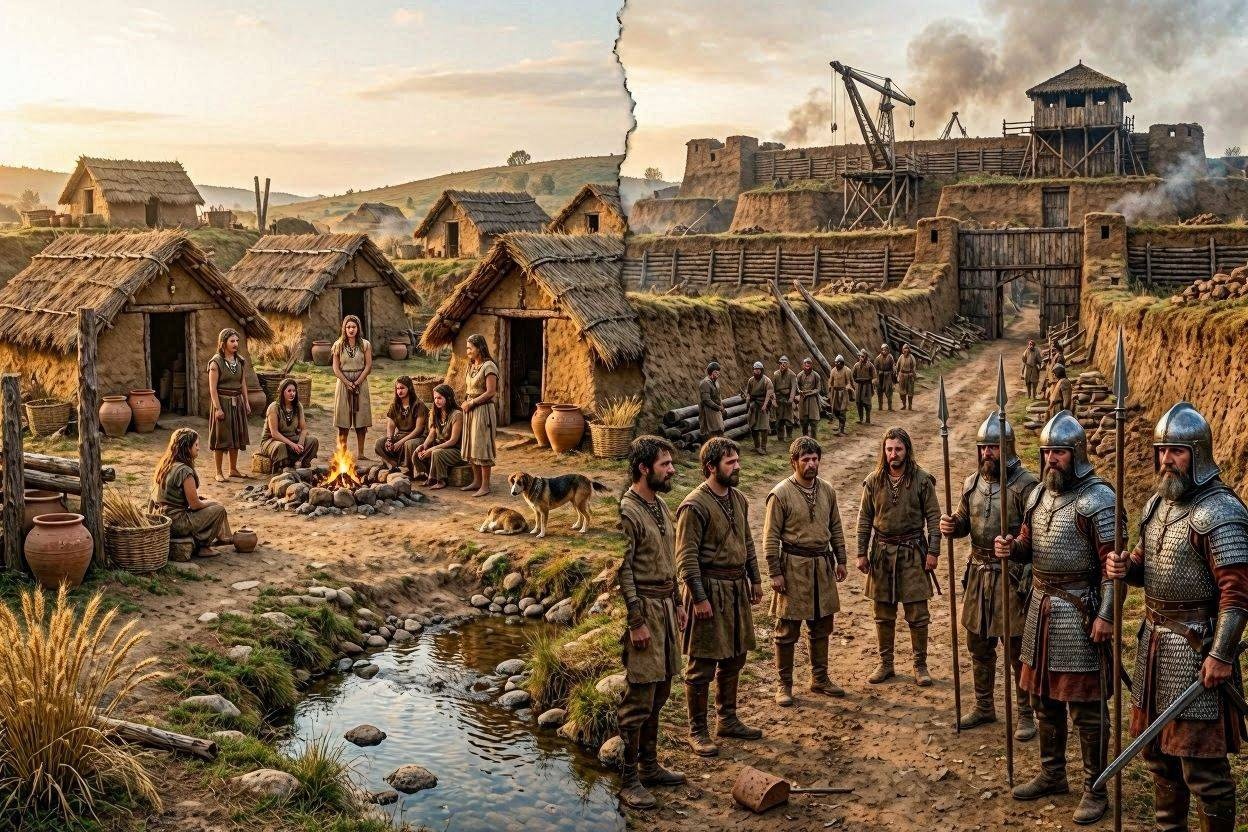
- The Isolated Peace of the Neolithic Age: Early humans lived in very small, independent settlements consisting of about a dozen dwellings, possibly unified by religion or totems. At this stage, there was no massive central authority or organized oppression.
- The Bronze Age and the Curse of Surplus: However, as populations grew and agricultural production increased, the situation drastically changed. Settlements were forced to combine into larger communities out of absolute necessity—specifically for "joint defense" against wars and "joint production," such as building massive irrigation systems. During this process, a hierarchy between the haves and the have-nots began to emerge, a fact proven by the stark differences in burial goods (such as those found in dolmens).
- The Iron Age: An Empire Forged in Blood and Iron: With the introduction of iron, the production of formidable iron weapons accelerated class division and fierce competition among communities. Within groups, the gap between the ruling class (warriors, priests) and the direct producers widened. Between groups, warfare and looting created a stark divide between conquering factions and ruined ones. Ultimately, to secure resources like salt and iron, and to establish joint defense systems like massive earthen fortresses, multiple communities unified into the first political entities—the "State".
As Karl Marx argued, the state emerged alongside the birth of class, fundamentally rooted in class dominance. Humanity voluntarily submitted to class hierarchy and delegated power to the state system simply to survive the horrors of starvation and barbaric looting. That was the original social contract.
2. From a Shield for Survival to a Weapon of Ideology
The state, originally forged for joint defense and production, exploded in size and nature through the Middle Ages and into the modern era.
Driven by the explosive productivity of the Industrial Revolution, advanced nations morphed into imperialistic monsters, trampling weaker countries to multiply their own wealth. Through the devastation of two World Wars, the state acted both as a shield protecting its citizens and as a ruthless apparatus of violence, sending millions of young people to their deaths to defend the ideological camps of capitalism and communism.
Under today's global free-trade system, hegemonic powers have armed themselves with intricate financial and legal systems, making the state more colossal and complex than ever before.
3. The Contract is Void : The State's Identity Crisis in the Era of AI and Decentralization
Let’s return to the present day. The original purpose of the state, built upon the blood and sweat of our ancestors, was "joint defense and joint production". Today, however, this ironclad contract is being shattered by cutting-edge technology.
- The Collapse of the Distribution System: AI and robotics have brought about exponential leaps in productivity, but the wealth generated is being sucked into a black hole controlled by a few mega-tech corporations and platform capitalists. Ordinary citizens are seeing their jobs threatened, yet the modern state stands by, failing to control this extreme income inequality.
- The Challenge of Decentralization: The rise of blockchain and cryptocurrency is a direct assault on the most potent power historically monopolized by the state: the right to issue currency. People are no longer putting blind faith in the state's economic control systems.
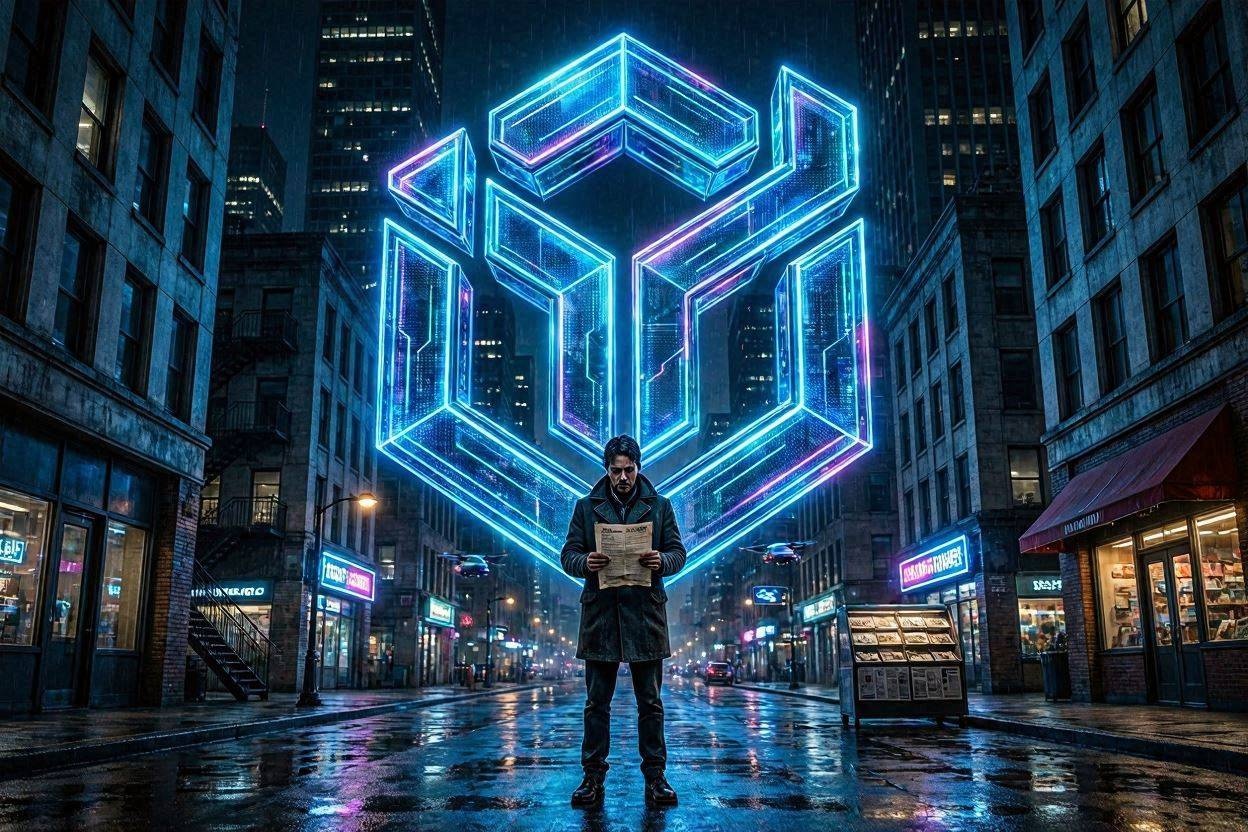
- The Rise of the New Tech Empires: Transnational giants like Amazon, Google, and Meta possess more capital, data, and influence than many sovereign nations. Faced with these new "virtual empires" that strip local economies of their market viability, traditional states appear slow, outdated, and powerless.
4. Conclusion : Demanding a Reboot of a Broken System
While the state is often viewed as a tool of oppression created by the ruling class, many modern citizens simply feel it is a "broken machine" that no longer protects them.
However, we must remember that the state is not a fixed law of nature; it is a cultural institution, created and continuously evolved according to the needs of its members.
Now, with AI poised to replace human labor and wealth inequality reaching a breaking point, we must demand a "New Social Contract" fit for the 21st century. It is time for serious discussions about Universal Basic Income (UBI), aggressive antitrust regulations to break platform monopolies, and innovative redistribution systems. The urgency to reboot our malfunctioning state system has never been greater.
I leave you with this question: In today's rapidly changing world, is your state a reliable "shield" that guarantees your survival, or has it become an inescapable "shackle"?