Hello, history enthusiasts! Welcome back to Rocwing's History Archive.
In our previous post, we explored the tragic life of King Gogugwon, the 16th monarch of Goguryeo, who fought a desperate lifelong battle. From watching his capital, Hwando Fortress, burn at the hands of Murong Huang of Former Yan, to falling in battle pierced by an arrow from Baekje’s King Geunchogo—why was King Gogugwon forced to spend his entire life on such a cruel and unforgiving battlefield?
To find the answer, we must expand our view beyond the Korean peninsula and look at the massive geopolitical earthquake shaking the Chinese mainland. In the 4th century, the continent was thrust into the most dynamic, chaotic, and blood-soaked era in its history: The Era of the Sixteen Kingdoms of the Five Barbarians.
Today, we will uncover the true face of this chaotic era that strangled King Gogugwon, and how the butterfly effect of this continental turmoil ultimately forged an empire.
1. What is the Era of the Sixteen Kingdoms? The Five Nomadic Tribes That Swept the Continent
Most of us are familiar with the Qin Dynasty, which first unified China, or the romanticized Three Kingdoms period featuring Liu Bei and Cao Cao. The empire that ended the Three Kingdoms and unified the central plains was the Western Jin. However, Western Jin quickly self-destructed due to the "War of the Eight Princes," a bloody internal power struggle among the imperial family.
Exploiting this massive power vacuum, nomadic equestrian tribes from north of the Great Wall surged southward. The Han Chinese referred to them as the "Five Barbarians" (Wu Hu: 五胡).
- The Five Tribes: Xiongnu, Xianbei, Di, Jie, and Qiang—a mix of northern nomadic and hunter-gatherer groups.
These five tribes, along with some Han Chinese factions, flooded into Northern China, each declaring themselves emperors in a ruthless battle for survival. According to the historical text Spring and Autumn Annals of the Sixteen Kingdoms, while countless states rose and fell over 130 years (from the early 4th to mid-5th century), sixteen major states defined the era.
To help you grasp the sheer scale and complexity of this dynamic period, here is a comprehensive guide to these sixteen defining kingdoms:
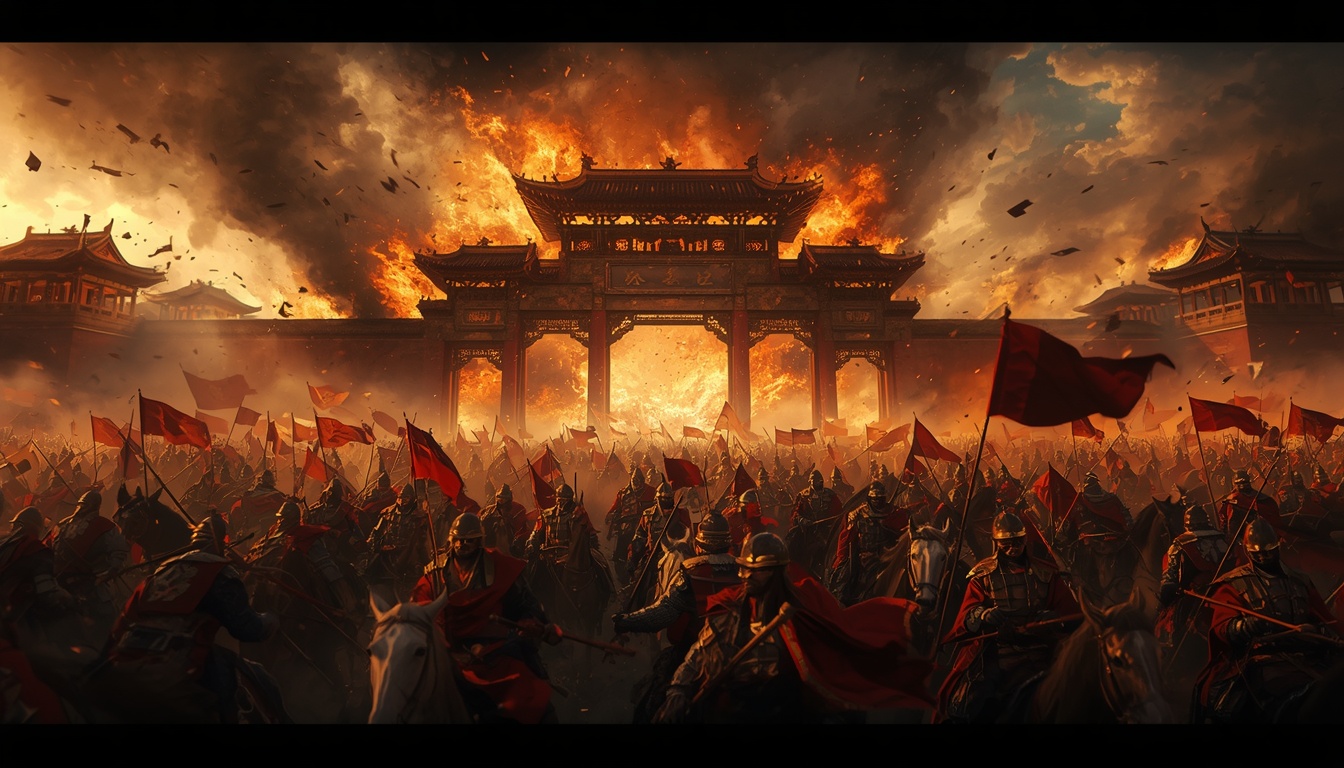
📌 The 16 Kingdoms: A Quick Guide to the Era's Major Players
| Kingdom | Founding Ethnicity | Founder | Key Historical Features |
| Former Zhao | Xiongnu | Liu Yuan | The first nomadic state to ignite the era; destroyed Western Jin. |
| Later Zhao | Jie | Shi Le | Destroyed Former Zhao to dominate the North. Notorious for its brutal rule. |
| Former Yan | Xianbei | Murong Huang | Goguryeo's greatest nemesis. A powerful equestrian state built by the Murong clan. |
| Later Yan | Xianbei | Murong Chui | A rebuilt Yan state that later clashed fiercely with Goguryeo's Gwanggaeto the Great. |
| Southern Yan | Xianbei | Murong De | Formed in the Shandong Peninsula after Later Yan splintered. |
| Northern Yan | Han / Goguryeo | Feng Ba / Gao Yun | Uniquely connected to Goguryeo; Gao Yun (a Goguryeo descendant) even ruled as its emperor. |
| Former Qin | Di | Fu Jian | The first state to unify Northern China. Later gifted Buddhism to Goguryeo's King Sosurim. |
| Later Qin | Qiang | Yao Chang | Established by the Qiang people after Former Qin was defeated at the Battle of Fei River. |
| Western Qin | Xianbei | Qifu Guoren | A mid-sized state established by the Qifu Xianbei in the Gansu region. |
| Former Liang | Han | Zhang Gui | Founded by a former Jin official in the Hexi Corridor, a vital Silk Road route. |
| Later Liang | Di | Lü Guang | Founded by a Former Qin general who declared independence along the Silk Road. |
| Southern Liang | Xianbei | Tufa Wugu | Established by the Tufa Xianbei as Later Liang declined. |
| Northern Liang | Xiongnu | Juqu Mengxun | Founded by the Xiongnu; one of the final states to fall in this era. |
| Western Liang | Han | Li Gao | Centered in Dunhuang. (Later considered the ancestors of the Tang Dynasty's royal Li family). |
| Cheng Han | Di | Li Xiong | Established in the Sichuan region; initially stable due to geographical isolation. |
| Xia | Xiongnu | Helian Bobo | Built by Xiongnu descendants. Famous for constructing the impregnable capital, Tongwancheng. |
As this table illustrates, the Sixteen Kingdoms period was not merely a series of "barbarian invasions." It was a colossal, continent-wide Battle Royale, where countless ethnicities fought to the death for national survival and territorial supremacy.
And the shockwaves of this violent storm inevitably crashed into the borders of Goguryeo.
2. Former Yan's Geopolitical Dilemma and the Ruthless Strategy of Survival
Among these sixteen kingdoms, the one that most fatally entangled with Goguryeo's history was Former Yan, established by the Xianbei Murong clan.
During this era, the ultimate goal for any ambitious ruler was to push south into the fertile central plains of China. Former Yan's brilliant and ruthless monarch, Murong Huang, burned with this exact ambition. He built a massive capital in Longcheng (modern-day Chaoyang, Liaoning Province) to consolidate his power.
Removing the Dagger Behind the Back: Murong Huang’s Cruel Decision
However, Murong Huang had a fatal vulnerability: the rising powerhouse of Goguryeo located right behind him to the east. At the time, another massive nomadic state, Later Zhao, dominated the central plains. If Murong Huang marched his main army south to fight Later Zhao, Goguryeo could easily strike his undefended capital. Such a two-front war would mean instant annihilation for Former Yan.
Therefore, when Murong Huang invaded Goguryeo with 40,000 elite heavy cavalry in 342 CE, it was not a mere raid for loot. It was a calculated, ruthless geopolitical survival strategy to completely eradicate the threat of Goguryeo before advancing south. By ambushing through a treacherous southern mountain pass, his army utterly destroyed Goguryeo’s capital, Hwando Fortress. King Gogugwon even suffered the apocalyptic humiliation of having his father’s corpse stolen by the invaders. Goguryeo became the first major victim of the continent’s manic expansionist energy.
🔍 Archaeological Evidence of the 4th-Century Goguryeo-Yan War
Modern archaeological excavations have vividly brought the horrors of this ancient war to light.
① The Black Ashes of Hwando Fortress:
At the Hwando Fortress excavation site in Ji'an, China, the tragedy remains physically embedded in the earth. Near the presumed palace grounds, archaeologists unearthed a thick layer of scorched earth, heavily blackened red lotus roof tiles, and massive amounts of melted iron weaponry. It is apocalyptic proof of how thoroughly the Former Yan army burned Goguryeo’s heart to the ground in 342 CE.
② Anak Tomb No. 3 and the Defected Yan General, Dong Shou:
The massive mural tomb "Anak Tomb No. 3" in Hwanghae Province is the ultimate archaeological testament to the complex relationship between Goguryeo and Former Yan. According to an ink inscription at the entrance, the tomb belongs to Dong Shou (冬壽), a former general under Murong Huang who lost a power struggle and defected to King Gogugwon of Goguryeo.
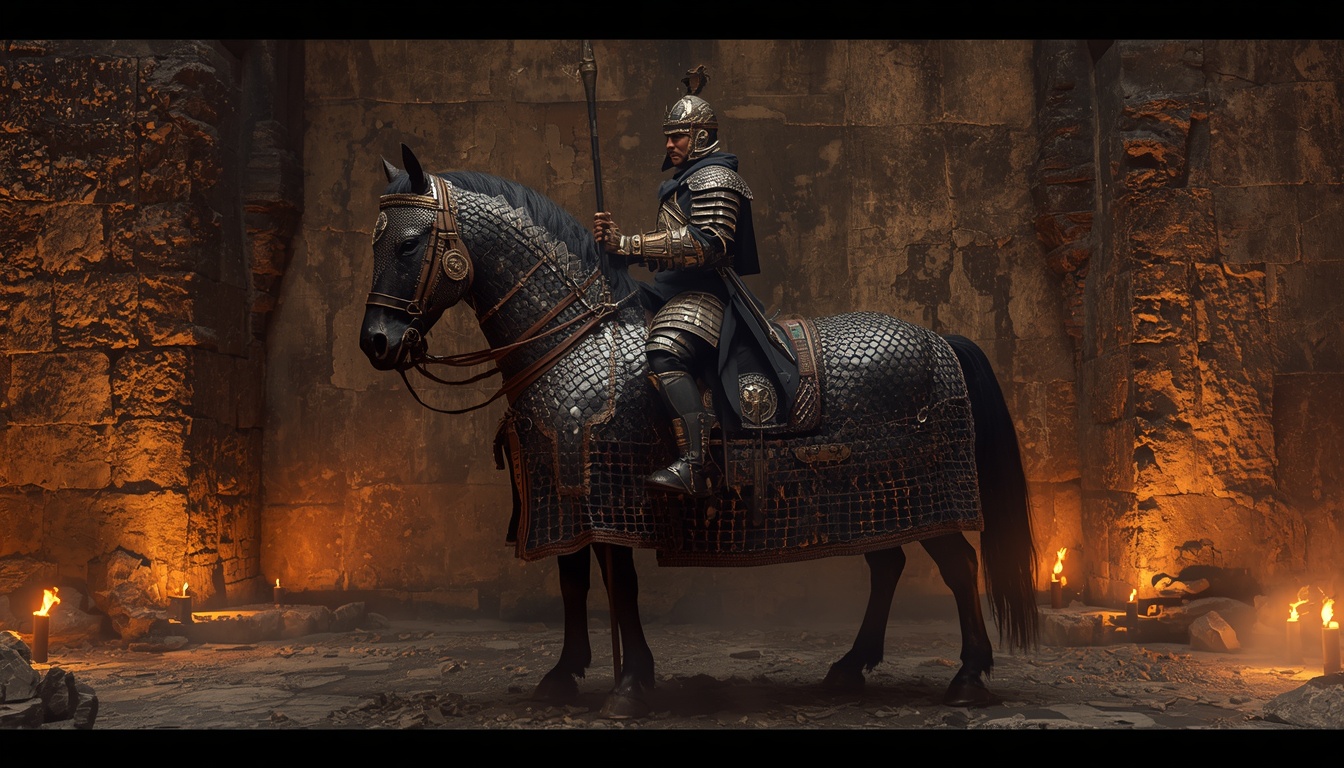
The murals inside this tomb feature a grand procession of Gaemamusa (Cataphracts)—heavy cavalry where both rider and horse are entirely encased in iron scale armor. This visually proves how the terrifying cavalry tactics of the Xianbei people were introduced to and clashed with Goguryeo, reflecting the intense military tension of the era.
③ The Ruins of Longcheng and the Xianbei Golden Crowns:
Excavations around Chaoyang (the former capital of Former Yan) have yielded fascinating artifacts. Numerous gilt-bronze crowns adorned with "Buyao" (swaying, tree-branch-like gold ornaments unique to the Xianbei) have been found. This distinct Xianbei style profoundly influenced the famous golden crowns of Goguryeo and Silla later on.
Furthermore, during the 342 CE war, Former Yan dragged 50,000 Goguryeo citizens back to Longcheng as prisoners. The frequent discovery of Goguryeo-style pottery and tomb structures in the Chaoyang area today is the heartbreaking archaeological footprint of those 50,000 enslaved captives who were forced to build the enemy's capital overnight.
3. The Seed of Resurrection: Former Qin’s Fu Jian and King Sosurim’s Resolve
Former Yan, the nemesis that tormented King Gogugwon his entire life, seemed invincible. Yet, it eventually collapsed due to internal power struggles. Stepping into the void was a brilliant hero who became the first to unify Northern China during the Sixteen Kingdoms era: Fu Jian, the ruler of Former Qin (氐).
Fu Jian was cut from a different cloth than the era's other ruthless warlords. Despite being of nomadic descent, he appointed a Han Chinese prime minister, championed radical ethnic integration, and actively promoted Confucianism and Buddhism, bringing a temporary golden age of peace to the war-torn North.
The Enemy of My Enemy: A "Soft Power" Gift in 372 CE
Former Qin (who destroyed Former Yan) and Goguryeo (who had its capital crushed by Former Yan) shared a perfect geopolitical alignment: the enemy of my enemy is my friend. To solidify an alliance with Goguryeo, Fu Jian utilized a profound "Soft Power" strategy. In 372 CE, he sent the monk Shundao (순도) as an envoy, gifting Buddhist scriptures and statues to Goguryeo.
At that moment, Goguryeo’s King Sosurim—who took the throne after his father (King Gogugwon) was killed in battle—faced a grim reality. Baekje was pressing hard from the south, and decades of defeat had shattered his people's morale. While he likely burned with the desire for immediate revenge, King Sosurim made a cold, calculating choice: instead of rushing into war, he initiated a complete systemic overhaul of the state.

King Sosurim’s Counterattack: Three Reforms That Birthed an Empire
Using the cultural energy of Buddhism gifted by Fu Jian, King Sosurim executed three monumental reforms in just two years, entirely rebuilding Goguryeo's foundation:
- Accepting Buddhism (372 CE) - Ideological Unification: Goguryeo's various tribes previously worshipped different local spirits, making national unity difficult. By adopting Buddhism as the state religion under the logic that "The King is Buddha," Sosurim united the fractured hearts of his people and centralized royal power.
- Establishing the Taehak (372 CE) - Cultivating Talent: He built the Taehak (National Confucian Academy) in the capital. This was a revolutionary shift from a system that only rewarded tribal warriors who could shoot arrows well, to one that systematically educated elite, administrative bureaucrats fiercely loyal to the state.
- Promulgating the Yulryeong (373 CE) - Systemic Governance: The following year, he issued the Yulryeong (a codified code of law). Moving away from inconsistent customary laws, he installed strict, documented administrative and penal codes—the essential hardware needed to govern a massive, organized state.
The Incubation of an Unstoppable Empire
The chaotic bloodshed of the Sixteen Kingdoms produced the Former Qin empire, which in turn passed the seed of Buddhism to Goguryeo. King Sosurim planted this seed in Goguryeo’s scorched earth, watering it with his own patience and tears.
If it weren't for this breathtaking, systemic restructuring, the thundering hooves of his nephew, Gwanggaeto the Great, who would later conquer Northeast Asia, would never have echoed across the continent. King Gogugwon’s agonizing sacrifice and King Sosurim’s lonely reforms were the great period of endurance—the darkest night required to usher in the radiant dawn of the Goguryeo Empire.
4. Conclusion : History’s Gears, Meshing with Blood and Tears
We often learn history as isolated stories confined within modern borders. But history never exists in a vacuum. The sandstorms of nomads far north of the Great Wall reduced a Korean capital to ashes, and from those ashes, a foreign seed called Buddhism took root, fertilizing the birth of a massive new empire. Our history was intricately, and often ruthlessly, interlocked with the giant gears of East Asian and global history.
The true allure of history lies in this "connectivity." Just as we had to look at the continental chaos of the Sixteen Kingdoms to fully grasp King Gogugwon's tragic death and King Sosurim's reforms, stepping back to see the macro-context breathes hot, pulsing life into the frozen past. In the deafening roar of history's interlocking gears, we witness the magnificent resilience of humanity surviving the crushing weight of their era.
And beneath the giant wheels of history, unrecorded by the victors, breathe the sweat, tears, and love of countless "individuals" who fought simply to survive.
Imagine that hellish moment when Murong Huang's 40,000 iron cavalry trampled Hwando Fortress, dragging 50,000 innocent citizens away as slaves. Amidst the smoldering ruins of the city walls, wasn't there a fierce Goguryeo warrior who mounted his horse and charged alone into the freezing, arrow-filled northern plains to rescue the love of his life from enemy hands?
In fact, there is a fictional historical saga about a valiant warrior named "General So-irang"—a romantic and tragic story conceived by a father 30 years ago, quietly tucked away in a desk drawer due to the heavy realities of life. After three decades of silence, the sound of his galloping horse is finally preparing to echo again, right here on [Rocwing's History Archive].
Set against the manic, dynamic, and brutal backdrop of the 4th-century Sixteen Kingdoms, the heart-pounding first chapter of this Goguryeo warrior's faction (historical fiction) romance may soon unfold in this very space.
Stay tuned for more deep dives into history that transcend borders and eras, and prepare for the awakening of a new hero's saga, born from the grinding gears of time!
[Deep Dive] Before the romantic saga of General So-irang unfolds, discover the heartbreaking fate of the monarch he fought for. Click here to read the tragic fall and legacy of Goguryeo’s King Gogugwon.
The Tragedy of King Gogugwon : The Fall of Hwando Fortress and the Rebirth of the Goguryeo Empire
The Tragedy of King Gogugwon : The Fall of Hwando Fortress and the Rebirth of the Goguryeo Empire
Imagine being a sovereign not just of a small kingdom, but of an expanding ancient empire akin to the Rome of Northeast Asia. Now, imagine watching your capital city burn to ashes, your mother dragged away in chains, and your father’s grave violently des
rokwing.com