Throughout the long history of the Korean Peninsula, countless kingdoms have risen and fallen. Usually, when a dynasty collapses, movements to resurrect its former glory inevitably follow—much like the fierce revival movements for the ancient kingdoms of Baekje and Goguryeo. Strangely enough, however, a "Goryeo Revival Movement" left almost no trace in history.
While there were isolated acts of profound loyalty—such as the martyrdom of scholar Jeong Mong-ju and the 72 loyalists of Dumundong—there was no massive national resistance or peasant uprising.
Why did this happen? In today’s post, we will look beyond a simple dynastic transition. Through the lens of a historian, we will dive deep into the real story hidden behind the quiet death of the Goryeo Dynasty and the birth of Joseon.
1. The Winter of Goryeo and a Fading Dynasty
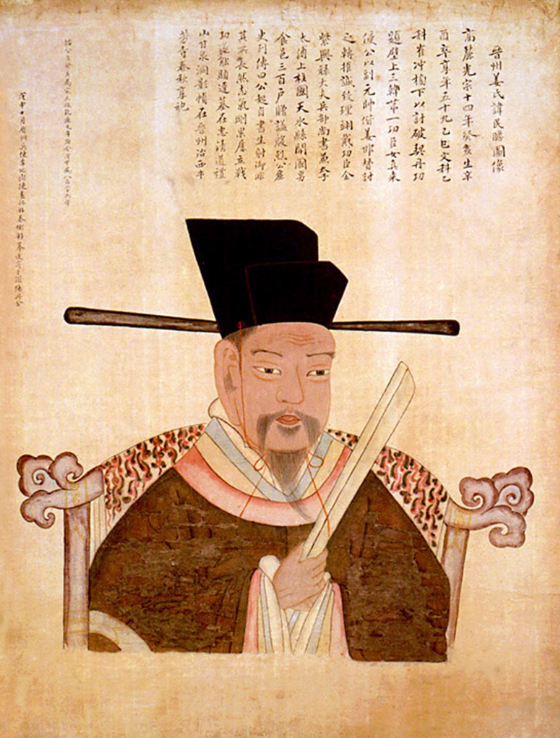
① King Gongmin, the 'Monarch of Strategy' : Throwing Off the Shadow of the Mongol Empire
Following the era of military dictatorships and brutal Mongol invasions, Goryeo's royal authority was utterly crushed under the interference of the Mongol-led Yuan Dynasty. King Chunghye was dragged off to Yuan and died in exile, and with young, vulnerable kings taking the throne in succession, Goryeo’s politics plunged into the dark ages.
This was the era when King Gongmin emerged. Having been held hostage in the Yuan court, he keenly sensed the waning power of his captors (who were battling the Red Turban Rebellions in China). The moment he ascended the Goryeo throne, he launched a bold, anti-Yuan independence movement.
- The Purge of Gi Cheol and Territorial Reclamation (1356) : King Gongmin summoned the faction of Gi Cheol—the brother of the powerful Yuan Empress Gi, who wielded absolute power in Goryeo—to a banquet and executed them with iron maces. Furthermore, he mobilized his military to forcefully reclaim the northern territories that had been lost to the Mongols for over a century. A key insider who aided King Gongmin in this campaign was none other than Yi Ja-chun, the father of the future founder of Joseon.
- Abolition of Mongol Customs : He restored Goryeo's pride by banning Mongol queues (braids) and traditional Mongol clothing at court.
However, the path to reform was fraught with peril. The Red Turban army invaded the peninsula twice, forcing King Gongmin to flee as far south as Andong. After finally reclaiming the capital, a horrific tragedy known as the 'Heungwangsa Incident' occurred. The top-tier generals who had successfully repelled the invaders were deceived by the king's closest aide, Kim Yong, and ended up killing each other. Ultimately, Kim Yong himself staged a rebellion to assassinate the king. This tragedy senselessly wiped out the brilliant military commanders who sustained Goryeo, leaving King Gongmin with a deep-seated paranoia and distrust of the existing elite.
② An Unconventional Appointment : Shin Don—Demonic Monk or Reformer?
Seeking to bypass the deeply entrenched noble families (Gwonmunsejog) and the academically networked Confucian scholars, King Gongmin made a shocking choice: a monk of slave descent named Shin Don. Because Shin Don had absolutely no political base, he was the perfect "sword" to execute the king's reformist will without having to walk on eggshells around the elite.
- Sweeping Land Reform: Shin Don returned massive tracts of land illegally seized by the powerful nobles to their rightful owners and emancipated those who had been unjustly forced into slavery. The commoners cheered him as a "saint," but to the vested noble class, he was a mortal enemy and a wicked sorcerer.
- Cultivation of the Neo-Confucian Literati: While Shin Don suppressed the powerful nobles, King Gongmin rebuilt the Seonggyungwan (the highest educational institution). Under this new academy, a wave of young, uncompromising scholars armed with Neo-Confucian ideology entered politics en masse. These men—the Sinjinsadaebu—would later split into the moderates who sought to protect Goryeo and the radicals who sought to build a new nation, Joseon.
But power always breeds paranoia. As Shin Don’s influence grew to the point of threatening the throne itself, King Gongmin ultimately executed his favored monk on charges of treason. He was thoroughly used and discarded.
③ The Death of Princess Noguk and a Bizarre End
King Gongmin's drive for reform completely shattered when his lifelong love, Queen Princess Noguk, passed away during childbirth. Consumed by grief, he abandoned state affairs and obsessively focused solely on the construction of her magnificent shrine.
Mentally broken, the king selected handsome young noblemen to form an elite royal guard called the Jajewi, which became the seed of his undoing. According to the Veritable Records, King Gongmin indulged in homosexuality and, desperate for an heir, forced members of the Jajewi, such as Hong Ryun, to sleep with his concubines. When Royal Consort Han became pregnant with Hong Ryun's child, the king planned to kill Hong Ryun to cover up the secret. However, Hong Ryun discovered the plot first and brutally assassinated the drunken, sleeping king.
(Note: Modern historians often debate whether these bizarre, scandalous records were historical distortions engineered by the later Joseon dynasty to justify their overthrow of Goryeo.)
④ The Peak of Corruption : The Reign of the Powerful Nobles
Following the assassination of King Gongmin, power fell back into the hands of the corrupt, vested noble class. An eleven-year-old puppet king was placed on the throne, and a "troika of power" monopolized state affairs.
During this period, the tyranny of these powerful families reached its zenith. They possessed massive agricultural estates—using mountains and rivers as boundary markers—while the lives of the common peasants turned into hell. Meanwhile, the idealistic Neo-Confucian scholars faced severe political persecution and exile for opposing the nobles' pro-Mongol policies.
⑤ The Ming Dynasty's Provocation and the Fateful 'Wihwado Retreat'
Later, the legendary General Choe Yeong and a rising military star named Yi Seong-gye joined forces to oust the corrupt nobles, seemingly stabilizing the political situation. However, a massive external crisis soon struck. The Ming Dynasty, having driven the Mongols out of China, began making unreasonable demands on the Korean Peninsula.
- A Brazen Territorial Grab: The Ming Dynasty brazenly declared that the northern territories formerly ruled by the Mongols now belonged to Ming China, demanding Goryeo hand them over. (This was the very region King Gongmin had shed blood to reclaim.)
- The Decision to Conquer Liaodong: Enraged, Goryeo's strongman Choe Yeong and the King rejected the Ming demand. Instead, they made the bold, arguably reckless, decision to launch a preemptive strike on Ming territory in Liaodong, China.
- The Retreat from Wihwado (1388): General Yi Seong-gye, deployed as the commander of the expeditionary force, reached 'Wihwado', an island in the middle of the Yalu River bordering China. It was the monsoon season; the river had swollen dangerously, and infectious diseases were spreading through the camp. Yi Seong-gye petitioned for a retreat citing the "Four Objections," but the King refused. Consequently, Yi Seong-gye made a treasonous choice: he turned his massive army around and marched back to the capital.
2. The Bizarre Founding of Joseon: A Bloodless Populace and a Meticulous Four-Year Build-up
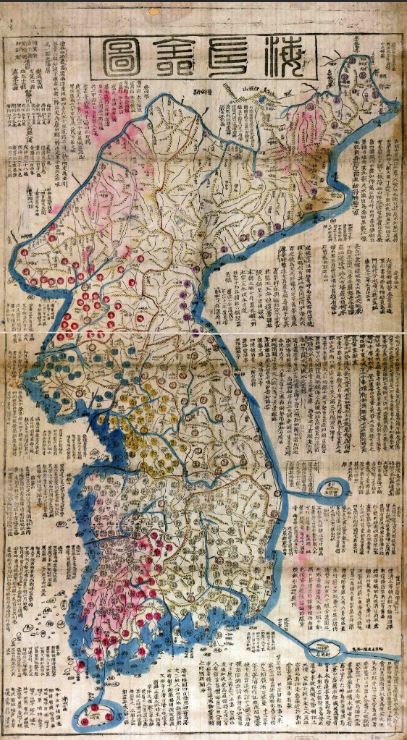
Usually, when a dynasty that has ruled for centuries collapses and a new nation is born, it is accompanied by horrific growing pains. If we look at the founding of the Han or Ming dynasties in China, or the Later Three Kingdoms period in Korea, decades of massive civil wars and extreme peasant rebellions soaked the land in blood.
However, if you look closely at the founding of Joseon, you will discover a process so unique it borders on "bizarre" in the context of world history. There was absolutely no large-scale resistance from the peasantry, nor any nationwide civil war to resurrect the old dynasty. While there was certainly political bloodshed at the very highest echelons of power—such as the assassination of the moderate scholar Jeong Mong-ju at Seonjuk Bridge—how was it possible to completely overhaul a nation so surgically and precisely from the top down?
The secret lies in a near-perfect "four-year master plan" forged by the military might of General Yi Seong-gye and the brilliant minds of Neo-Confucian scholars like Jeong Do-jeon and Jo Jun.
① A King Who Refused the Crown : Building the Justification
Through the Wihwado Retreat in 1388, Yi Seong-gye gained absolute control over Goryeo’s military and politics. He held the supreme power to ascend the throne that very day if he had wished. Yet, Yi Seong-gye did not immediately wear the crown. Instead, he waited for four long years. Knowing that a nation built solely on military force could not endure, his faction meticulously engineered the "justification" for a new dynasty.
They introduced a brilliant and devastating political framing: "Discard the Fake, Establish the True" (廢假立眞). They spread the narrative that King U and his son King Chang were not of the true royal bloodline of King Gongmin, but were actually the illegitimate descendants of the demonic monk Shin Don. Using this justification, they legally dethroned the two kings, placed a manageable puppet monarch (King Gongyang) on the throne, and slowly choked the life out of the Goryeo dynasty.
② The 'Fire Show' that Stole the People's Hearts : The Land Reform
The most decisive reason Joseon could be founded without a massive peasant rebellion was that they completed an "economic coup" first.
At the time, the powerful nobles (Gwonmunsejog) owned sprawling agricultural estates—so vast they used mountains and rivers as property lines—while mercilessly squeezing the peasantry dry. In 1390, Yi Seong-gye’s economic masterminds, Jo Jun and Jeong Do-jeon, gathered the national land registers (the official property deeds of the noble class) in the center of the capital and set them on fire. As this massive bonfire burned for days and nights, the starving peasants of Goryeo cheered in the streets.
Following this, the state confiscated the land and redistributed it through the Rank Land Law (Gwajeonbeop). In one stroke, they completely severed the economic lifelines of the corrupt nobles, secured the financial foundation for their new bureaucrats, and drastically reduced the tax burden on the commoners. From the peasants' perspective, there was absolutely no reason to risk their lives fighting to revive the old Goryeo regime that had only starved them.
③ Mencius and the 'Dynastic Revolution' : Securing Ideological Legitimacy
Even with military and economic control, a coup without ideological legitimacy is only half-complete. Jeong Do-jeon weaponized Neo-Confucianism—specifically the philosophy of Mencius—to package this regime change as a righteous "Dynastic Revolution" (Yeokseong Hyeokmyeong).
The revolutionary logic was simple but profound: "The Mandate of Heaven rests with the people. A monarch who fails to care for the people loses the will of Heaven. Therefore, it is entirely just to change the royal surname and establish a new nation." Their ultimate justification was a grand blueprint to tear down a corrupt Buddhist state and erect a highly moral, Confucian utopian nation in its place.
④ Surgical Assassinations and the Blood of Seonjuk Bridge
In the end, only one obstacle remained: Jeong Mong-ju, the spiritual pillar of both the intellectuals and the common people, and the leader of the moderate reformists. Jeong Mong-ju wanted to reform Goryeo while keeping its framework intact. When Yi Seong-gye fell from his horse during a hunting trip and was bedridden, Jeong Mong-ju seized the opportunity to strike back, exiling Jeong Do-jeon and other radical allies.
Stepping into this crisis was Yi Seong-gye’s son, Yi Bang-won. Acting on behalf of his hesitant father, Yi Bang-won ordered an assassin to strike down Jeong Mong-ju with an iron mace in broad daylight on Seonjuk Bridge. This was not a simple murder; it was highly calculated political terrorism that shattered Goryeo’s last remaining pillar of hope, declaring to the entire world that Goryeo was finished.
With Jeong Mong-ju removed, further resistance was impossible. Just three months later, the puppet King Gongyang voluntarily handed over the royal seal to Yi Seong-gye. Thus, the 474-year epic history of Goryeo came to a quiet end.
Ultimately, the founding of Joseon was not an accidental military coup. It was the most precisely orchestrated "National Restructuring Project" in world history, executing in perfect sequence: Military Takeover (Wihwado Retreat) ➔ Economic Takeover (Land Reform) ➔ Ideological Legitimacy (Dynastic Revolution) ➔ Surgical Removal of the Final Rival (Assassination of Jeong Mong-ju).
3. Gwonmunsejog vs. Sinjinsadaebu: Good vs. Evil? The Toxic Trap of Black-and-White History
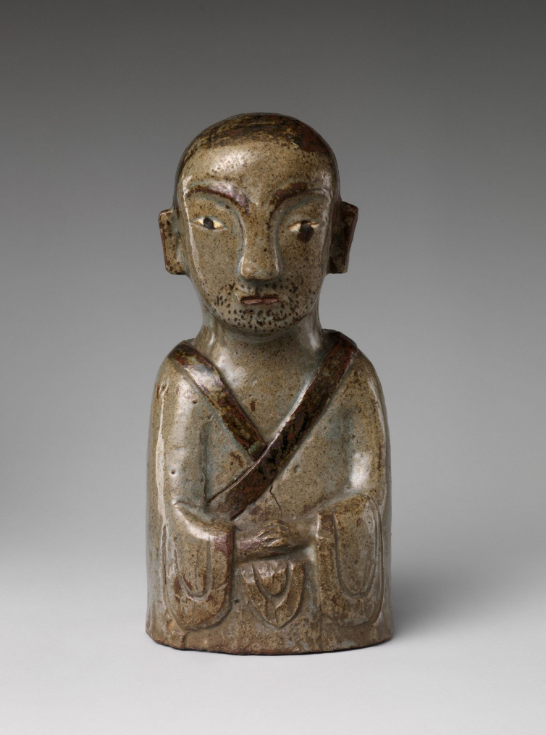
If you took a standard Korean history class in school, the political landscape of late Goryeo was probably painted for you like a superhero movie script:
"The corrupt, greedy, pro-Mongol mega-landlords (The Villains: Gwonmunsejog) vs. The pure, principled, Neo-Confucian middle-class scholars (The Heroes: Sinjinsadaebu)."
However, modern historians fiercely reject this binary framework. History is rarely sliced cleanly into black and white, good and evil. When we peer closely at the reality of these two groups, a fascinating truth emerges that completely shatters conventional historical myths.
① They Were Not Opposing "Political Parties"
First, we must clear up a fundamental misunderstanding about the terminology. Gwonmun simply means "powerful figures," and Sejog means "families who have held power for generations." Similarly, Sadaebu was just a generic term for literati or government officials. In other words, these were not the names of distinct, organized political factions like today's "Conservative Party" or "Liberal Party."
② Poor and Upright Reformers? The Economic Paradox
The biggest misconception is the economic class-warfare narrative: that the Sinjinsadaebu were middle-class underdogs fighting against the monopolistic Gwonmunsejog landlords.
In reality, Jo Jun—the ultimate mastermind behind Joseon's founding and its radical land reform—hailed from the Pyeongyang Jo clan, one of the most powerful and wealthiest families of the era, possessing massive agricultural estates. Even Yi Saek, the revered mentor of the Neo-Confucian scholars, came from a family of enormous landowners. This was absolutely not a desperate fight between the rich and the poor.
③ The Ruling Class Never Changed : A Parallel to Modern Politics
Let’s compare this to modern politics. Whenever a "regime change" occurs through an election, we often feel like the entire country is going to flip upside down. But whether the government shifts from progressive to conservative, or vice versa, the deep state of high-ranking bureaucrats, corporate elites, and the underlying "elite cartel" rarely changes. It’s also common to find that top politicians from opposing parties are actually university alumni or even related by marriage.
The transition from late Goryeo to early Joseon was exactly like this. The vast majority of the bureaucrats who founded Joseon (such as Gwon Geun, Jo Jun, and Ha Ryun) were already the "top 1% elite" who had passed the civil service exams and held high offices during the Goryeo dynasty. There was no dramatic replacement of the ruling class or a peasant revolution; it was merely a "hegemonic shift" and an internal policy dispute within the existing establishment.
④ From Buddha to Confucius? A World That Doesn't Change Overnight
The same applies to the ideological shift. While the Neo-Confucian scholars heavily criticized Buddhism to justify their coup, the founding of Joseon did not make Buddhism vanish overnight.
In fact, well into the mid-Joseon period (the 17th century), deeply rooted Goryeo customs—such as daughters inheriting equal shares of property alongside sons, women leading ancestral rites, and relatively free divorce and remarriage—remained prevalent throughout society. The rigidly patriarchal, suffocating Confucian society we often associate with Joseon did not actually take full root until the late Joseon era.
To summarize, here is how the traditional myth compares to the modern historical consensus:
| Category | Traditional Myth (Black & White Logic) | Modern Historical Consensus (The Reality) |
| Nature of the Terms | Two clearly opposing political factions. | Generic nouns simply meaning 'powerful families' and 'officials'. |
| Economic Base | Mega-landlords vs. Middle-class scholars. | Many Neo-Confucian scholars were also mega-landlords. |
| Foreign Policy | Pro-Yuan (Nobles) vs. Pro-Ming (Scholars). | Impossible to cut so cleanly; alliances shifted based on pragmatic situations. |
| Political Shift | Fall of a corrupt regime and the rise of a new class. | The Goryeo bureaucratic elite largely maintained their power in Joseon. |
| Social Ideology | Corrupt Buddhism vs. Reformist Neo-Confucianism. | Traditional Goryeo/Buddhist social customs (like equal inheritance) survived until the 17th century. |
Ultimately, the founding of Joseon was not a one-dimensional fairy tale of new heroes defeating old villains. It was a highly complex outcome born from fierce internal turf wars and methodological disputes within the existing ruling class during a massive historical turning point.
4. The Genius Architect Jeong Do-jeon: Coding the "Software" of Joseon
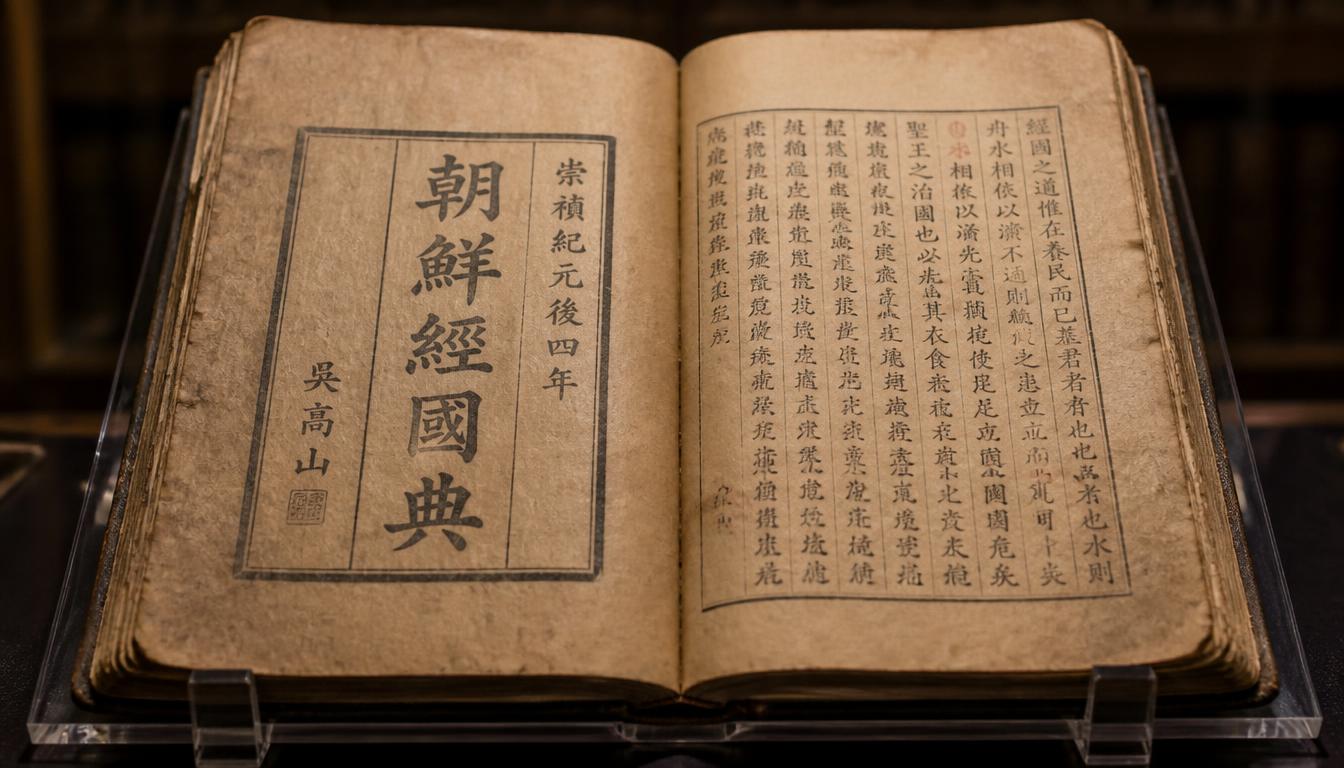
① A Nation Built by the Sword, Sustained by the Pen: Justifying the Revolution
Power can be seized by the sword, but it can never be maintained by the sword alone.
Consider the classic epic, Romance of the Three Kingdoms. While Liu Bei’s faction boasted invincible warriors like Guan Yu and Zhang Fei, it was the brilliant strategist Zhuge Liang who designed the framework of their state. The founding of Joseon was no different.
While the new military elite—Yi Seong-gye and his son Yi Bang-won—secured physical power through the Wihwado Retreat, they desperately needed a brain to package and justify their military coup as a glorious "Founding of a Nation." That role fell to Sambong Jeong Do-jeon.
He formally defined Goryeo as a doomed state where "corrupt aristocrats monopolized wealth and a depraved Buddhist establishment deceived the masses." He then elevated Yi Seong-gye’s coup into a righteous "Dynastic Revolution" (Yeokseong Hyeokmyeong)—a divine mandate from Heaven to cut out the rot and save the people.
② The Chief Designer of a 500-Year Dynasty: From Capital to Constitution
What should the new nation be called? Where should its capital be located? Jeong Do-jeon operated as the chief designer of a massive national startup.
He personally chose the name "Joseon" and relocated the capital to Hanyang (modern-day Seoul). He mapped out the locations and even named the grand royal palace (Gyeongbokgung) and the Four Great Gates of the city. He deliberately embedded the core Confucian virtues of In, Ui, Ye, Ji (Benevolence, Righteousness, Propriety, and Wisdom) into these names. Going even further, he authored the Joseon Gyeonggukjeon (The Administrative Code of Joseon), writing the flawless operating manual for the entire state apparatus. It is no exaggeration to say that the nation of Joseon was born straight out of Jeong Do-jeon’s mind.
③ The Essence of His Philosophy : A Prime Minister-Led System
The absolute core of Jeong Do-jeon’s vision for Joseon was the Prime Minister-Led System (Jaesang Chongjaeje).
In a dynastic state, the throne is strictly hereditary. While you might occasionally get a genius, benevolent king like Sejong the Great, there is always the statistical risk of inheriting a tyrant or an incompetent fool. Jeong Do-jeon was terrified of the idea that the fate of a 500-year nation could wildly fluctuate based on the personal competence of a single monarch.
Therefore, he envisioned a highly advanced system: "The King reigns as the symbolic head of state, but actual governance is led by the Prime Minister and an elite cabinet of scholars who have been rigorously vetted through state civil service exams."
It was an incredibly visionary political philosophy, remarkably similar to a modern constitutional monarchy with a parliamentary cabinet, or a corporate structure led by a professional CEO. He loathed the idea of abnormal, unchecked power—like the monk Shin Don in the previous dynasty—ruining a system based solely on a king's personal favor. A perfectly predictable, orderly state maintained by an elite meritocracy—this was Jeong Do-jeon’s ultimate vision.
④ Bulssi Japbyeon (Critiques Against Buddhism): A Paradigm Shift
Jeong Do-jeon believed that for Joseon to truly stand strong, he had to thoroughly dismantle Buddhism—the ideological backbone of Goryeo—and implant a Neo-Confucian worldview. His famous text, Bulssi Japbyeon, was not merely a critique of a religion; it was a fundamental paradigm shift in how to view the world.
"It is evident that when Qi (vital energy/matter) flourishes, things are created simultaneously, and when Qi declines, they diminish simultaneously. Therefore, angered by how the Buddhist theory of reincarnation deeply deceives the world... I have arrived at this conclusion. I ask those of like mind to observe this truth with me."
He meticulously refuted the Buddhist concept of reincarnation (the idea that a human could be reborn as an animal, or vice versa) using the Neo-Confucian natural science of the "gathering and dispersing of Qi." It was a bold declaration that the new nation would not be governed by superstition or illusions, but by cold, rational, and reality-based reason (Neo-Confucianism).
⑤ The Architect’s Tragedy and a Historical Irony
However, there was a fatal collision course built into this genius blueprint. Jeong Do-jeon's ideology—that the King should step back into a symbolic role behind the system—was utterly incompatible with the beliefs of Yi Bang-won. Yi Bang-won believed to his core: "This nation, built with my blood and sweat, belongs to the Yi royal family, and the monarch must wield absolute, unchallengeable power."
Ultimately, in 1398, the "First Strife of Princes" erupted. Before the ruthless blade of Yi Bang-won, the great architect of Joseon met a futile and bloody end. The meticulous laws and systems Jeong Do-jeon had created could not block the physical, merciless reality of Yi Bang-won's sword.
Yet, here lies the great irony of history. After striking down his mortal enemy, Yi Bang-won publicly branded Jeong Do-jeon a traitor. However, behind closed doors, he adopted almost all of the state systems and policies Jeong Do-jeon had designed—from the bureaucratic framework to the suppression of Buddhism and the establishment of the capital in Seoul.
Jeong Do-jeon’s flesh was cut away, but the magnificent "software" called Joseon that he coded ended up running smoothly on the powerful "hardware" of Yi Bang-won for the next five centuries.
5. King Taejong (Yi Bang-won) : Planting the Seeds of a Golden Age in Blood
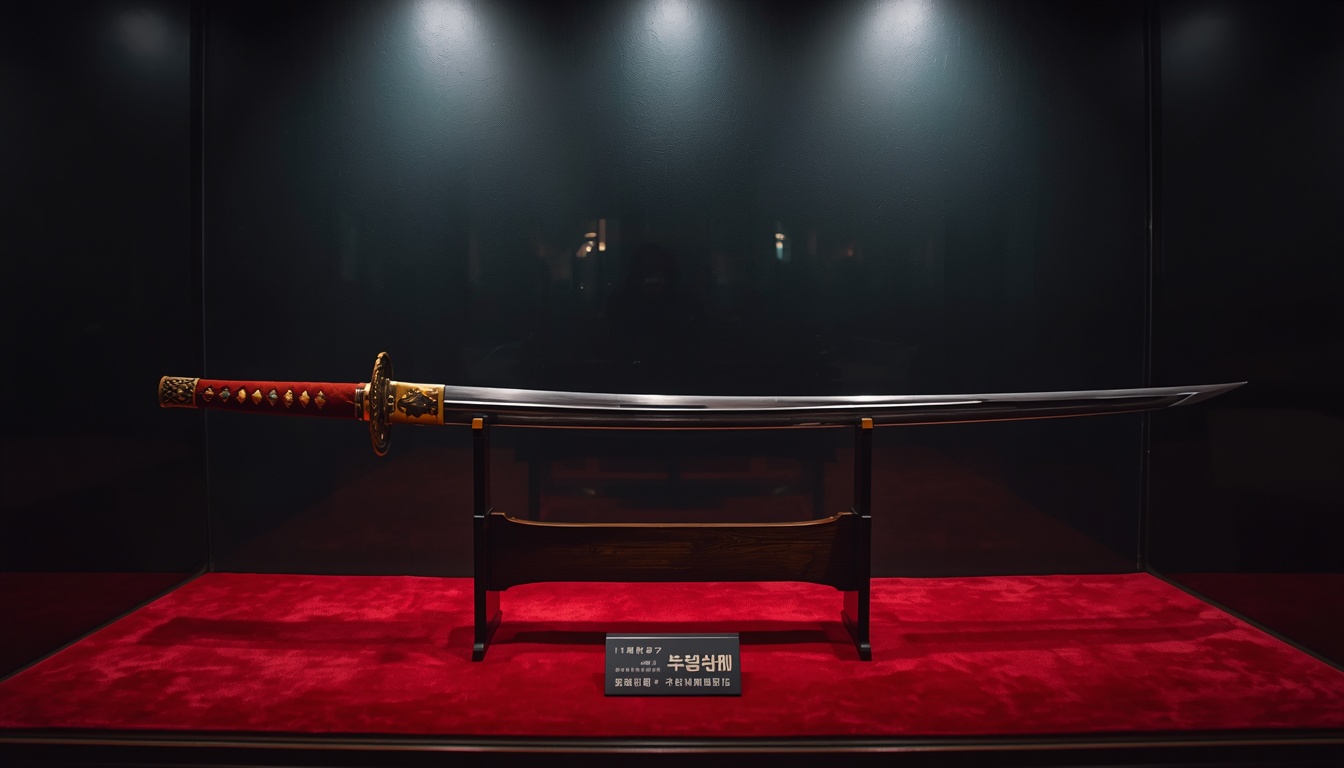
① Joseon's Sharpest Blade Takes the Throne for Himself
Without Yi Bang-won, the nation of Joseon would not exist. When his father hesitated, it was Yi Bang-won who shattered the political deadlock by assassinating Jeong Mong-ju. It was also Yi Bang-won who violently suppressed the rebellions that threatened the fragile early state. The architect Jeong Do-jeon was only able to design the nation so freely because Yi Bang-won’s overwhelming military might protected him.
However, after the founding of Joseon, Yi Bang-won was thoroughly excluded from power. His name was omitted from the list of founding contributors, and the coveted title of Crown Prince was given to his youngest half-brother. Pushed to the edge, he orchestrated the "First Strife of Princes" in 1398, ruthlessly slaughtering his half-brothers and the state architect, Jeong Do-jeon. Shattered by this coup, his father, King Taejo (Yi Seong-gye), abdicated. After a brief reign by his older brother, Yi Bang-won finally ascended the throne in 1400 as the third monarch of Joseon, King Taejong.
② Exterminating In-Laws and Loyalists: A Ruthless Blood Purge
The moment he sat on the throne, King Taejong began a relentless dance of swords. Shockingly, his blade was not pointed at his enemies, but at his closest allies—the very people who had risked their lives to make him king.
- The Fall of His In-Laws (The Yeoheung Min Clan): He executed the younger brothers of his own wife, Queen Wongyeong, accusing them of privately coveting power, despite the fact that her family had been his greatest political sponsor.
- The Purge of Founding Loyalists: He kept his political mentor, Ha Ryun, close but constantly checked his power. Even worse, he mercilessly exiled his closest comrade and political enforcer, Yi Suk-beon.
- The Cold-Blooded Execution of His Son's Father-in-Law: Even after he abdicated the throne to his third son (King Sejong), Taejong framed Sejong’s father-in-law, Sim On, for treason and forced him to drink poison. His reasoning was simple: he eliminated anyone who could potentially threaten his son's royal authority.
③ Why Did He Have to Become Such a Cruel "Monster"?
Was this the madness of a man obsessed with power? No. Beneath Taejong's bloody purges lay cold, precise political calculation.
He was a man who had watched with his own two eyes as the Goryeo dynasty collapsed because powerful nobles and maternal relatives monopolized state affairs. His unwavering conviction was this: "The governance of a new dynasty must stem solely from the absolute authority of the royal house." He knew that if the queen's family or the founding generals amassed too much power, the throne would inevitably shake, and the common people would suffer. Therefore, he ruthlessly severed every potential risk at its root, taking the karma of those murders upon himself.
④ Completing the Skeleton of Joseon
Ironically, after purging all his political rivals, King Taejong devoted the rest of his life to completing the exact "predictable, orderly state" that his murdered rival, Jeong Do-jeon, had dreamed of.
- Implementation of the Hopae System: He introduced the Hopae—a 15th-century equivalent of modern national ID cards—to accurately track the population and ensure fair tax collection.
- Abolition of Private Armies: He banned aristocrats from maintaining personal troops, integrating them all into the national military to permanently eliminate the seeds of rebellion.
- Confiscation of Temple Lands and Tax Reform: He seized the massive estates and wealth of corrupt Buddhist temples, using them to solidify the new nation's financial foundations.
⑤ The Father Who Played the Villain, Giving Birth to a Great Sage King
King Taejong was willing to let the storms of blood rain down during his own reign, so long as his successor could govern freely without any political debts, checks, or threats.
He bypassed his martial-minded eldest son to pass the throne to his bookish third son, King Sejong (Sejong the Great). Taejong understood that this new, peaceful era he had built required the mind of a scholar, not the sword of a warrior. Even one year after Sejong ascended the throne, Taejong—acting as King Emeritus—wielded his military authority one last time to launch the Conquest of Tsushima Island, wiping out the Japanese pirates. It was his final gift to his son, ensuring that Sejong’s reign would be free even from external threats.
The glorious "Golden Age" of King Sejong the Great, which Koreans revere so deeply today, was only able to bloom because it was planted on the bloody red carpet laid down by a father who silently chose to play the villain.
[Epilogue: Concluding Thoughts]
The fall of Goryeo and the founding of Joseon. It was a massive, epic drama born from the violent collision of human desires and political philosophies—a history far too complex to be explained by the simple black-and-white logic of a "corrupt, old Goryeo" versus a "new, hopeful Joseon." I hope this journey into the hidden facets of history has left you with some fascinating questions to ponder.
While researching this topic, contemplating the direction of the narrative, and fleshing out the details, I had a profound realization: Trying to understand Korean history merely through the pages of a school textbook is absolute nonsense. I realized how meaningless it was to study history just to memorize important dates, figures, and eras using formulas, only to regurgitate them onto an exam paper.
The brilliant foresight and political acumen of figures like King Taejong and the state's chief architect, Jeong Do-jeon, were so extraordinary that they would easily dominate even the most fierce and chaotic political battles of the modern era.
However, amidst our admiration for these masterminds, I believe we must dedicate an equal amount of weight and reflection to the innocent lives lost. We must never forget the resentment and sorrow of the people who were unjustly sacrificed as collateral damage for the sake of a single, grand objective.